domingo, 20 de enero de 2013

Classic Hollywood's Divas - Audrey Hepburn (Part 2)


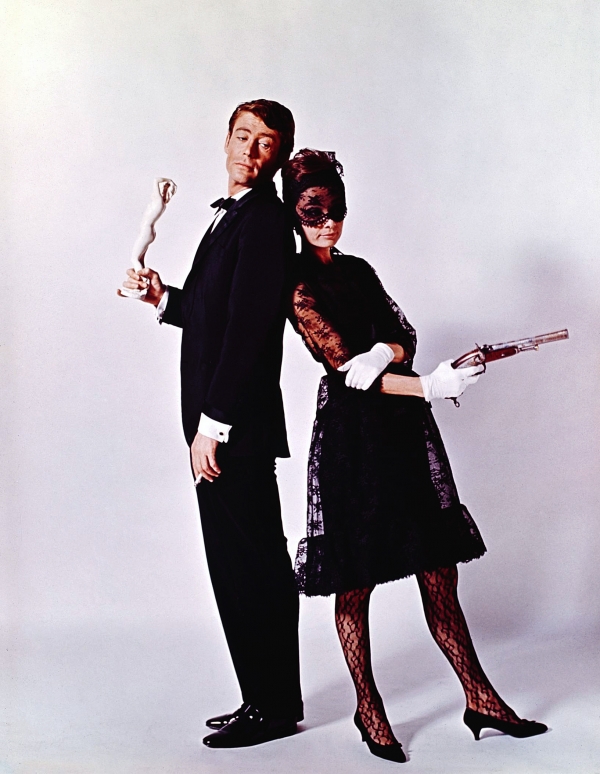
In the 60s, she continued starring unforgettable films like “The Unforgiven” (1960), which may be her most remembered character, the unforgettable Holly Golightly in “Breakfast at Tiffany's” (1961), “The Children's Hour” (1961) “Charade “(1963), “Paris when it sizzles” (1964), the famous eight Oscar winning musical, “My Fair Lady” (1964), “How to Steal a Million ...” (1966), “Two for the Road” (1967) and “Wait Until Dark” (1967).


En los años 60, continuó protagonizando películas inolvidables como “Los que no perdonan” (1960), el que puede que sea su personaje más recordado, la inolvidable Holly Golightly de “Desayuno con diamantes” (1961), “La calumnia” (1961), “Charada” (1963), “Encuentro en París” (1964), el famoso musical ganador de 8 Oscar,  “My Fair Lady” (1964), “Cómo robar un millón y...” (1966), “Dos en la carretera” (1967) y “Sola en la oscuridad” (1967).


 She was muse of fashion designer Hubert de Givenchy, who dressed her in films like “Sabrina” (1954), “Funny Face” (1957), “Love in the afternoon”  (1957), “Breakfast at Tiffany's” (1961), “Paris when it sizzles”  (1964), “How to Steal a million ...” (1966), or “Charade” (1963).


Fue musa del diseñador de moda Hubert de Givenchy, quien la vistió en películas como “Sabrina” (1954), “Una Cara con ángel” (1957), “Ariane” (1957), “Desayuno con diamantes” (1961), “Encuentro en París” (1964), “Como robar Un Millon y ...” (1966), o “Charada” (1963).  

In the decade of the 70 she began to withdraw from the cinema, appearing in films only occasionally, among which are “Robin and Marian” (1976) with Sean Connery, “Bloodline” (1979) and “They All Laughed” (1981). Her last film work was in 1989 with Steven Spielberg in the movie “Always”.

En la década de los 70 comenzó a apartarse del cine, apareciendo en películas únicamente de forma ocasional, entre las que se encuentras “Robin y Marian” (1976) con Sean Connery, “Lazos de sangre” (1979) y “Todos rieron” (1981). Su último trabajo en el cine fue en 1989, con Steven Spielberg, en la película “Para siempre”.  


In the 80's and 90s Audrey's main task was the humanitarian, helping poor children as special ambassador for UNICEF. One of the things that stood out in her later years was the dedication, over her health, to the causes of AIDS or malnutrition of children worldwide. In 1992, three months before her death, Audrey made her last trip to Somalia.


En los años 80 y 90 la principal tarea de Audrey fue la humanitaria, ayudando a los niños pobres como embajadora especial de la UNICEF. Una de las cosas que más destacaron en sus últimos años fue la dedicación, por encima de su salud, a las causas del sida o la malnutrición de los niños en todo el mundo. En 1992, tres meses antes de su muerte, Audrey hizo su último viaje a Somalia.


She was married twice. The first with the actor Mel Ferrer and the second with an Italian doctor named Andrea Dotti, from who divorced in 1982 for his infidelities. From these relationships and after suffering five abortions she had two sons, Sean in 1960 and Luca in 1970. In her last years had an affair with Robert Wolders, a Dutchman with whom she shared her final days.


Estuvo casada en dos ocasiones. La primera con el actor Mel Ferrer  y la segunda con un médico italiano llamado Andrea Dotti, del que se divorció en 1982 por sus continuas infidelidades. De estas relaciones y tras sufrir cinco abortos tuvo dos hijos, Sean en 1960 y Luca en 1970. En los últimos años mantuvo un romance con Robert Wolders, un holandés con quién compartió sus últimos días.

 
She died at her home in Switzerland because of a colon cancer in January 20, 1993 at the age of 63 years.


Falleció en su casa de Suiza a causa de un cáncer de colon el 20 de enero de 1993 a la edad de 63 años.


What if someone wants, in 2000 it was made a TV movie about her life starring Jennifer Love Hewitt and called “The Audrey Hepburn Story”, personally I have not seen it yet, but I think it is what I will do now.


Por si a alguien le apetece, en el 2000 se hizo una película para televisión sobre su vida protagonizada por Jennifer Love Hewitt y que se llama “La Historia de Audrey Hepburn”, personalmente no la he visto aún, aunque creo que ya se lo que voy a hacer ahora.


And as a final touch, I leave some quotes from a woman I would have loved to know.

Y como broche final, os dejo algunas frases de una mujer a la que me hubiera encantado conocer.

"I like people who make me laugh. I truly believe that laughing is the thing I like most. Cure a multitude of ills and is probably the most important thing in a person."

"Me gusta la gente que me hace reír. Sinceramente, creo que reír es la cosa que más me gusta. Cura una multitud de males y es probablemente la cosa más importante en una persona."

"You can know better a person by what he says about others than by what others say about her."

"Puedes conocer mejor a una persona por lo que dice de los demás, que por lo que  los demás dicen de ella.”

"Life is hard. After all, it kills you."

"La vida es dura. Después de todo, te mata." 
 

Classic Hollywood's Divas - Audrey Hepburn (Part 1)


After several days gathering photos and reading about her life, today I finally had time to finish the post about Audrey Hepburn, one of the most stylish actresses of the twentieth century, icon of elegance, simplicity and solidarity. And suddenly I have realized that today marks the 20th anniversary of her death. From The Black Fashion Project, we want to pay a small tribute to the life of the actress who was a cinematographic reference and fashion icon with a collection of photos in which she was dressed in black.

Después de varios días recopilando fotos y leyendo sobre su vida, hoy por fin he tenido tiempo de terminar el post sobre Audrey Hepburn, una de las actrices más estilosas del siglo XX, icono de elegancia, sencillez y solidaridad. Y de repente me he dado cuenta de que hoy se cumple el 20 aniversario de su muerte. Desde The Black Fashion Project, queremos rendir un pequeño homenaje a la vida de la actriz que consiguió ser todo un referente cinematográfico e icono de moda con una recopilación de fotos en las que viste de negro.

Audrey Hepburn was born on May 4th 1929 in Brussels, Belgium and was baptized with the name of Edda Kathleen van Heemstra Hepburn - Ruston. Descendant of one high class family, she was the only daughter of British banker Joseph Victor Anthony Ruston and his second wife, Baroness Ella van Heemstra, a Dutch aristocrat daughter of former governor of Dutch Guiana (Surinam).


Audrey Hepburn nació el 4 de Mayo de 1929 en Bruselas, Bélgica y fue bautizada con el nombre de Edda Kathleen Van Heemstra Hepburn - Ruston.  Descendiente de una familia de clase alta, fue la única hija del banquero británico Joseph Victor Anthony Ruston y de su segunda esposa, la baronesa Ella Van Heemstra, una aristócrata holandesa hija del ex gobernador de la Guayana Holandesa (Surinam). 

Following the divorce of her parents, in 1939 she moved with her mother and two siblings from mother to her grandfather's house in Arnhem, Netherlands. There she attended the Conservatory to study piano and ballet, which she combined with her schooling.

Tras el divorcio de sus padres, en 1939 se trasladó con su madre y sus dos hermanos de madre a la casa de su abuelo en Arnhem, Países Bajos. Allí acudió al conservatorio para estudiar piano y ballet clásico, los cuales compaginaba con sus estudios escolares.

World War II marked her youth. She was living between Belgium and the Netherlands with the name Edda Van Heemstra, to hide her English origin. The book The Diary of Anne Frank's marked her for life by the similarities between her life and that of the author. "I had exactly the same age as Anne Frank. Both were 10 when the war started and 15 when it ended. A friend gave me the book by Ana in Dutch in 1947. I read it and destroyed me. The book has that effect on many readers, but I do not see it that way, not only as printed pages, it was my life. I did not know what I was going to read. I have not been the same, it deeply affected me". These experiences contributed to Audrey was always beside UNICEF for the rest of her life.

La Segunda Guerra Mundial marcó su juventud. Estuvo viviendo entre Bélgica y Holanda con el nombre de Edda Van Heemstra, para ocultar su origen inglés. El libro El Diario de Ana Frank la marcó de por vida, por las semejanzas entre su vida y la de la autora. «Tenía exactamente la misma edad que Ana Frank. Ambas teníamos 10 cuando empezó la guerra y 15 cuando acabó. Un amigo me dio el libro de Ana en holandés en 1947. Lo leí y me destruyó. El libro tiene ese efecto sobre muchos lectores, pero yo no lo veía así, no solo como páginas impresas; era mi vida. No sabía lo que iba a leer. No he vuelto a ser la misma, me afectó profundamente». Estas experiencias contribuyeron a que Audrey estuviera siempre al lado de UNICEF durante el resto de su vida.

During World War II, she worked as a volunteer nurse in a Dutch hospital and also collaborated with the Dutch Resistance, giving ballet performances to collect donations for anti-Nazi campaigns.

Durante la Segunda Guerra Mundial, trabajó como enfermera voluntaria en un hospital holandés y también colaboró con la Resistencia holandesa, dando espectáculos de ballet para recolectar donaciones para campañas anti-nazi.

After the war, Audrey moved to Amsterdam and then to London where she continued her studies of ballet. Due to the economic situation of the family and his breathing problems and anemia as a result of the war, she had to leave the ballet and decided to start working as an actress. Her first role was in the educational documentary "Nederlands in 7 Lessen ", in 1948.


Al finalizar la guerra, Audrey se mudó a Ámsterdam y después a Londres donde continuó con sus estudios de ballet. Debido a la situación económica de la familia y por sus problemas respiratorios y de anemia como consecuencia de la guerra, tuvo que abandonar el ballet y decidió empezar a trabajar como actriz.  Su primer papel fue en el documental educativo “Holandés en siete lecciones”, en el año 1948. 

Due to her qualities for dancing, began acting in different musical productions such as “High Button Shoes” and “Sauce Piquante”. Her first film role was in the English film “One Wild Oat” in which she acted as a hotel receptionist. She also appeared in supporting roles in films such as “Young Wives' Tale”, “Laughter in Paradise”, “The Lavender Hill Mob”, and “Monte Carlo Baby”. During the filming of “Monte Carlo Baby” she was chosen to star in the Broadway musical “Gigi”, released on November 24th 1951. Thanks to this work she won the "Theatre World Award" for her debut.

Dadas sus cualidades para el baile, empezó a actuar en diferentes producciones musicales como “High Button Shoes” y “Sauce Piquante”. Su primer papel en una película fue en el film inglés “One Wild Oat” en el cual actuaba como recepcionista de un hotel. También actuó en papeles secundarios en películas como “La historia de unas jóvenes esposas”, “Risa en el paraíso”, “Oro en barras”, y “Monte Carlo Baby”. Durante el rodaje de “Monte Carlo Baby” fue elegida para protagonizar el musical de Broadway “Gigi”, estrenado el 24 de noviembre de 1951. Gracias a ese trabajo ganó el “Theatre World Award” por su debut.


Her first major role was in the film “Secret People”, in which performing the role of a dancing prodigy. But the role that catapulted her to fame, besides being his first Hollywood role was alongside Gregory Peck in “Roman Holiday”, by William Wyler. From there her life changed: a new star was born. Her performance in the film was awarded with the Oscar for Best Actress. Audrey Hepburn became the interpreter of the Year.


Su primer papel de importancia fue en el film “Secret People”, en el cual realizaba el papel de una bailarina prodigio. Pero el papel que la catapultó a la fama, además de ser su primer papel en Hollywood, fue, junto a Gregory Peck, en “Vacaciones en Roma”, de William Wyler. A partir de ahí su vida cambió: había nacido una nueva estrella. Su interpretación en el film fue premiada con el Oscar a la mejor actriz. Audrey Hepburn se convirtió en la intérprete revelación del año. 

During the '50s, Audrey starred great classics such as: “Sabrina” (1954), “War and Peace” (1956), “Funny Face "(1957) one of her favorite movies because she got to dance with Fred Astaire, “Love in the afternoon” (1957), “Green Mansions” (1959) directed by Mel Ferrer, actor, producer and director with whom she married in 1954., and “The nun's Story” (1959), one of her most dramatic and daring roles. About this role Films in Review said: "Her role will quiet all that said she is only a symbol of sophisticated women. Her interpretation of Sister Luke is one of the best performances of the cinema." for Audrey the fact of meeting the real protagonist and the similarities between them (they were Belgian and had experienced the war) made ​​to reconsider and handed much more to her humanitarian work.


 Durante los años 50, Audrey protagonizó grandes clásicos como: “Sabrina” (1954), “Guerra y paz”(1956), “Una Cara Con Ángel" (1957) una de sus películas favoritas debido a que consiguió bailar con Fred Astaire, “Ariane” (1957), “Mansiones verdes” (1959) dirigida por Mel Ferrer, actor, productor y director con el que se casó en el año 1954  e “Historia de una monja” (1959), uno de sus papeles más dramáticos y atrevidos. Sobre este papel Films in Review dijo: «Su papel callará a todos los que dijeron que es solo un símbolo de mujer sofisticada. Su interpretación de la hermana Luke es una de las mejores actuaciones del cine». Para Audrey, el hecho de conocer a su protagonista real y las similitudes entre ambas (eran belgas y habían sufrido la guerra) hizo que recapacitara mucho y se entregara más a sus labores humanitarias.